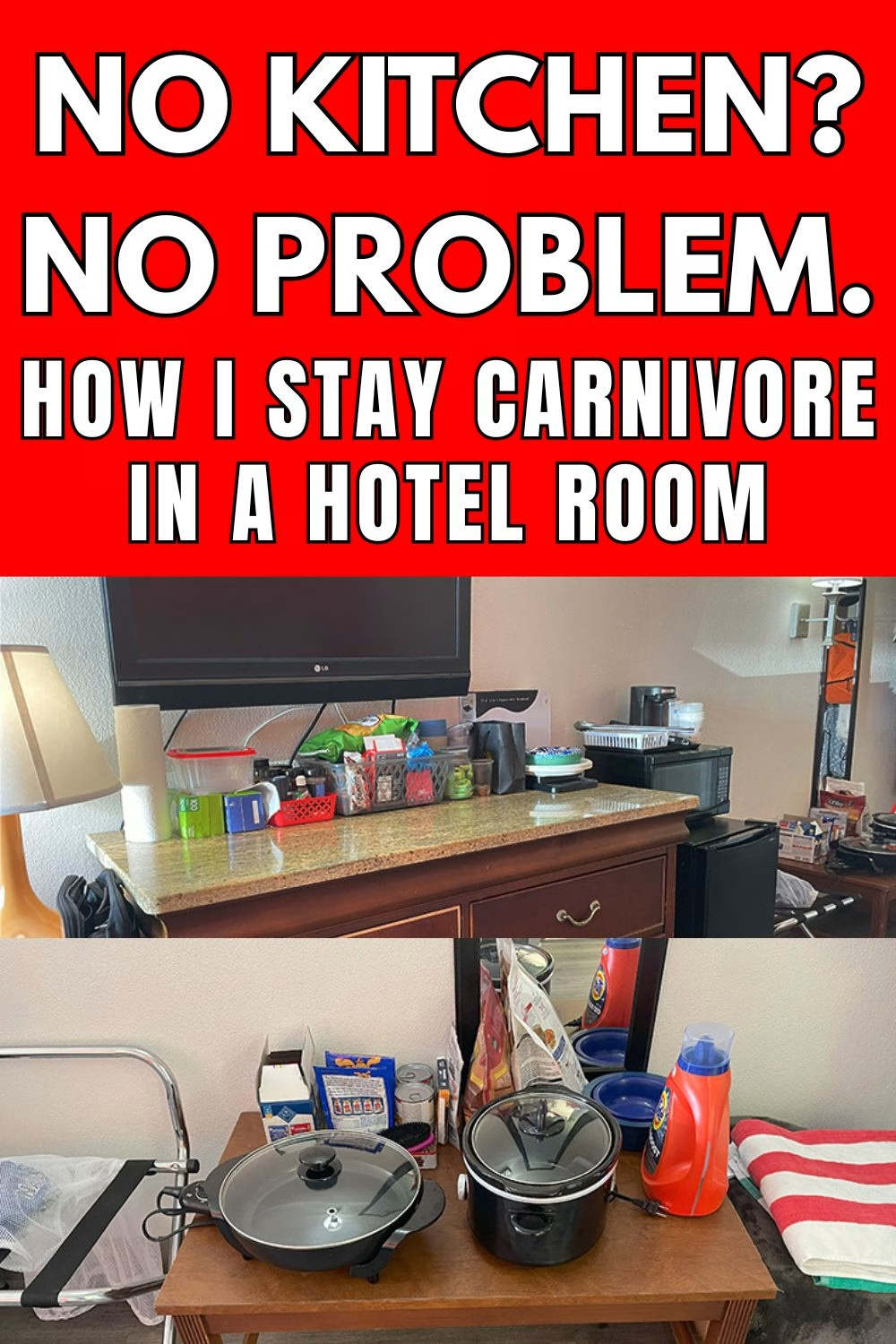
I’m currently (temporarily) living in a hotel room with no traditional kitchen. We’re away from home for six months for my partner’s job in another state. I’m also on a strict carnivore diet. It can be challenging without access to a stove. But as long as you have a way to refrigerate your food and electricity, you can make it work.
In this post, I’m sharing my tips, tricks, and tools for staying carnivore without a kitchen. Whether you’re traveling and stuck in a hotel room or just living in a non-traditional space right now, you can still stick to carnivore. Where there’s a will, there’s a way. No excuses!
My Minimalist Food Prep Area Tour
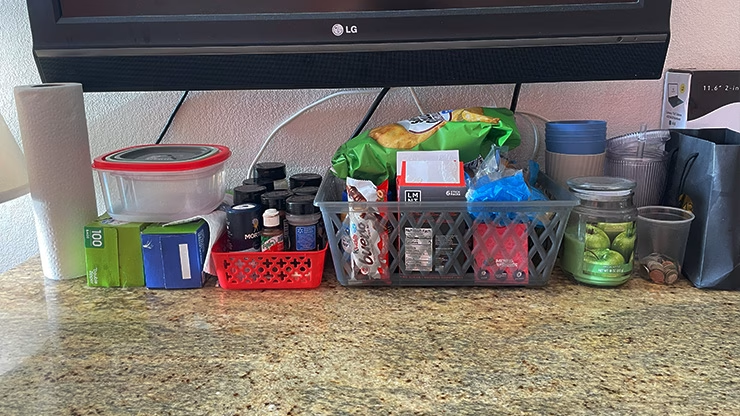
We’re lucky to have a pretty large hotel room paid for by my partner’s employer. We have some counter space that we share with the TV. I move it out of the way when I’m cooking. (You gotta do what you gotta do, my friends.)
The room is also equipped with a mini-fridge and microwave. The microwave isn’t essential, but it does come in handy for reheating leftovers and melting butter. My partner is not carnivore and he’ll also use it to heat soups, water for ramen, etc.
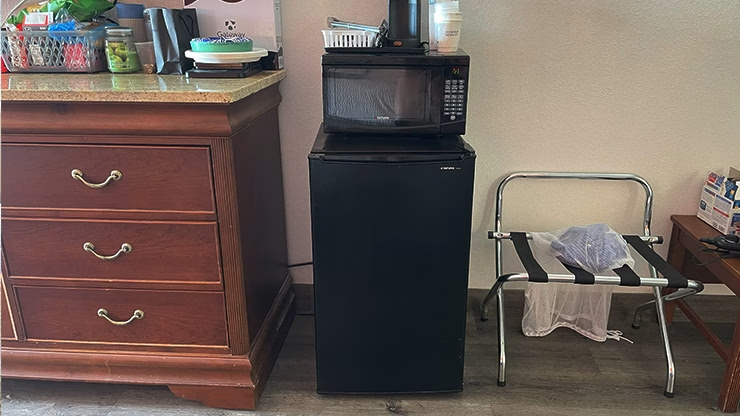
The refrigerator is necessary. It would be very difficult to stay carnivore without a way to refrigerate food. Not impossible, I suppose. You could alway buy fresh meat daily and cook it immediately. But it would definitely be more of a hassle. If nothing else, I’d recommend a small mini fridge or even a cooler that you can replenish with ice frequently.
With no stove available, I had to get creative in finding ways to prepare food. These are the tools I use frequently:
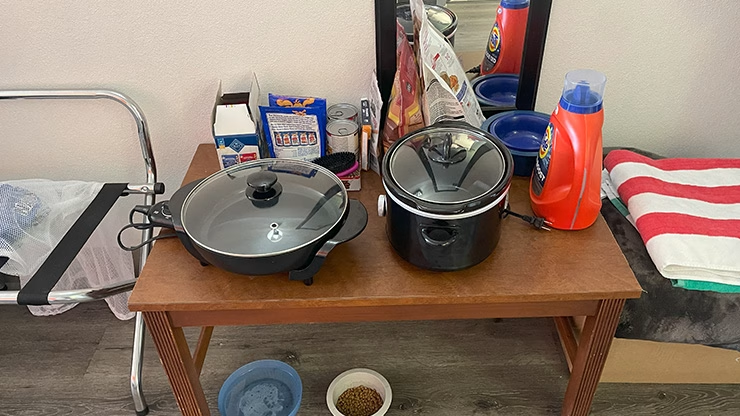
- Electric Skillet – A 12-inch electric skillet has been invaluable to me. I use it to cook eggs and bacon, ground beef, pork chops, and even burgers (if I’m not able to grill). Just place it on a sturdy surface, plug it in and set the temperature, and start cooking. If you can get one with a lid, that’s very helpful too.
- Charcoal Grill – We’re lucky that our hotel permits grilling outside our room. Since we’ve had the grill, we use it at least three times a week (sometimes more). Even if you don’t have electricity, you can still prepare meat on a small grill. We frequently grill burgers, steaks, pork chops, chicken thighs, etc.
- Slow Cooker – Another great tool for hotel rooms, dorms, and other small spaces. I use mine primarily to cook chuck roasts, but it’s great for any large hunks of meat that need a long cooking time (like pork roasts). I recommend at least a 4-quart size. I’m able to comfortably cook a 2-3 lb. roast in mine.
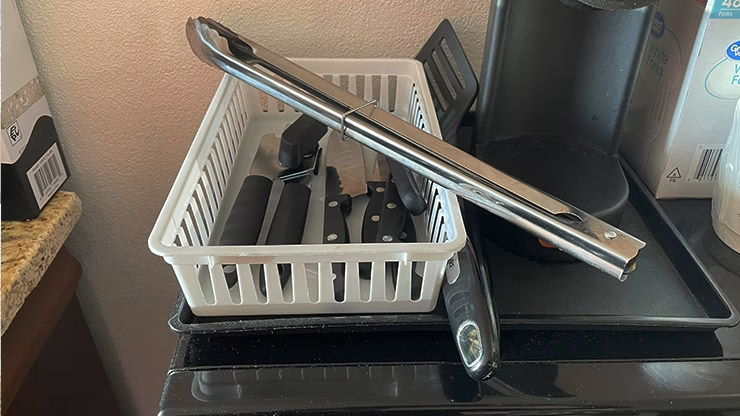
As for cooking utensils, we have very few. We make due with a pair of tongs, a cheap spatula, a can opener, a single butcher’s knife, and some cheap steak knives we bought at Dollar Tree (you can get everything you need there very cheaply if you’re on a budget).
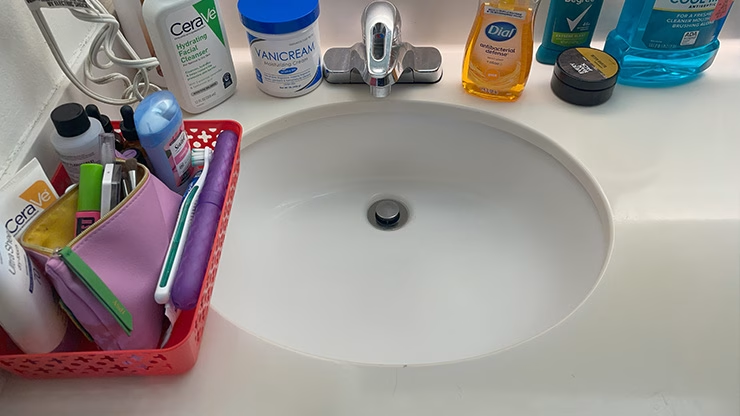
We use paper plates, paper bowls, and disposable forks (although I am planning to buy some cheap silverware for the remainder of our stay). I know it’s not ideal, but I have to wash all our dishes in a tiny bathroom sink. This makes things easier to manage.
For washing dishes, I keep a small bottle of Dawn and a Scrub Mommy in the bathroom. The sink is small, but I make it work. If need be, I’ll wash larger items – like the slow cooker – in the bathtub. Again, you gotta do what you gotta do.
We don’t have a coffee maker, but our hotel provides free coffee 24/7. I grab a cup every morning to dissolve my collagen peptides in, but this is obviously not a necessity. If you drink coffee or tea, a small coffee maker doesn’t take up much space on a table or counter.
Keeping Things Organized
When you’re working with a small space, it’s important to keep things organized or you can quickly become overwhelmed. I bought some small baskets from the Dollar Tree to help organize my kitchen tools and dry goods.
For dry goods, I keep several spices on hand for seasoning meats. Because my partner is not carnivore, we also store his breads, boxed and canned goods, etc. on our small counter. Keeping these neat and separated makes cooking easier.
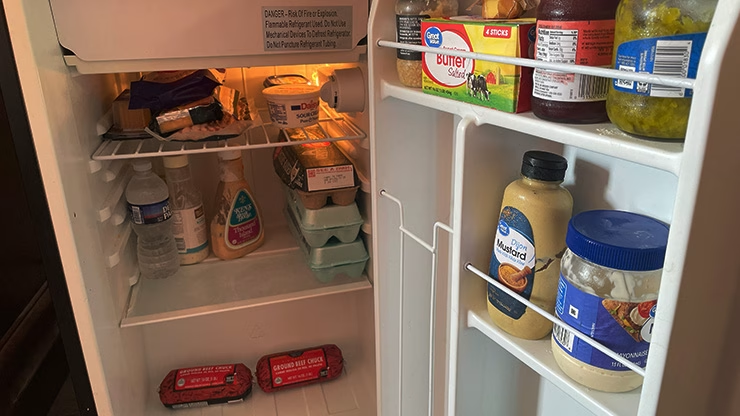
The fridge can be harder to keep organized, especially when it’s small and you have to cram everything in there. I have three shelves in mine and a small freezer. Here’s how I organize it (or at least try to):
- Top shelf – Cheeses, cured meats like bacon, sour cream, and anything else I can fit in this small area.
- Middle shelf – Mostly for things that won’t fit elsewhere, like tall sauce bottles my boyfriend uses, bottled water, etc.
- Bottom shelf – Packages of fresh meat, placed on the bottom so they don’t leak on other food.
- Door shelves – Condiments and butter, or whatever small items I can fit there.
- Freezer – There’s a small freezer area that I can sometimes cram a things into, like frozen burgers or a small bag of frozen shrimp, etc.
As for storing larger items like the slow cooker and electric skillet, we have a small table next to the refrigerator we use to hold what we can’t fit on the counter. This area also doubles as our dog supply area, where we store food, treats, etc. for our two small dogs. We don’t have much space, so we have to make due.
We don’t usually have a lot of leftovers – usually only when we grill burgers or I cook a shitload of ground beef. In those cases, I have some plastic storage containers I bought at Dollar Tree to store them in. I don’t re-heat in these because I’m sure they’re made of trash plastic, but they keep the food fresh in the fridge for a day or two.
Staple Carnivore Foods I Keep on Hand
I’ve found several meats and carnivore foods that store well and cook easily in small spaces. Unfortunately, because of space constraints, I can’t typically buy food in bulk to save money. So, we do the best we can.
Here are the foods I always keep on hand (or buy frequently in my weekly grocery hauls):
- Ground beef – I buy 1-lb or 3-lb packages of ground beef (depending on my current space and budget). Ground beef is easy to cook up in the electric skillet and stores well in the small fridge.
- Steak – I’ll get packages of two ribeye or New York strip steaks at a time, and they fit perfectly on the bottom shelf of the refrigerator. We cook them on the charcoal grill outside.
- Chuck roast – Easy to cook in the slow cooker, though it does take up quite a bit of room in the fridge. It’s worth it for the amount of food you get from a single roast.
- Bacon – Packs of bacon are pretty small, so I have no issue storing them. And bacon cooks up nicely in the electric skillet.
- Eggs – If you’re working with a very small refrigerator, you can buy a carton of six eggs. I typically buy a dozen (or sometimes two) at a time, because we have the space and I eat a lot of eggs. I can fry, scramble, or even hard-boil them in the electric skillet. You could even scramble eggs in the microwave in a pinch.
- Butter – This is a necessity on the carnivore diet (in my opinion). I only cook with butter or bacon fat in the electric skillet. I also top my steak, chuck roast, burgers, pork chops – pretty much all my meat – with extra butter.
I’ll also sometimes buy small packages of chicken thighs or chicken legs, pork chops, ground sausage, or premade burger patties if there’s space in the fridge. I typically buy about four days’ worth of food at a time. Any more than that, and I’ll run out of room to store it.
Staying Consistent & Motivated in a Challenging Setup
Even if I were living in a tent with nothing but a campfire, I’d make carnivore work for me. It’s that important to me at this point in my life. I stuck to this diet for over year, lost weight and put my PCOS in remission, and then fell off. I went from feeling the best I’d ever felt to the absolute worst. I will never go back to that old way of life again.
Here are some tips for staying motivated and consistent, even when you’re in a challenging situation (like having no kitchen):
- Reconnect with your reason for doing this – Remind yourself daily why you chose the carnivore lifestyle. When things get tough, remember your health goals, how far you’ve come so far, and how good you feel when you stick to this. When motivation fades, purpose will sustain you. It’s never worth it to move backward, and I know that from bitter experience. You can make this work.
- Make it non-negotiable – Treat carnivore as a lifelong committment. In a small space, there’s temptation to just grab fast food or eat what’s easiest, but having a clear “no matter what” mindset helps you stay grounded. Take all other options off the table. This is the way you eat, and nothing can stand in the way of that.
- Keep meals as simple as possible – When options are limited, don’t waste energy on trying to make fancy meals or elaborate recipes. Stick to a few go-to proteins and rotate them (ground beef, steak, and chuck roasts are my favorite carnivore foods). Decision fatigue is real, so reduce friction wherever you can.
- Use visual reminders of your progress – Keep a photo somewhere visible to remind yourself how far you’ve come. Space may be limited, but your mindset doesn’t have to be. I keep a photo of me at my highest weight on my desktop. I look at it every single day. I refuse to ever return to that misery. I also frequently look at photos of me at my healthiest, and that motivates me to keep going – to get back to that place and even surpass it.
- Plan for emergencies – Have a list of emergency foods that require no cooking (boiled eggs, beef jerky, canned fish, pre-cooked bacon, etc). Keep these foods stocked so when life gets chaotic, your plan is already in place. I try to always keep some beef sticks or something on hand. You’re much more likely to cave if you’re starving. If all else fails, fast food burger patties work too. The point is to think about what you’ll do in a pinch and plan ahead.
- Remember this is temporary – Whatever your current situation is, it’s most likely not going to last for the rest of your life. But the habits you build during this time will! You’re learning to make carnivore work anywhere, despite any challenges, and proving to yourself you can do it no matter what.
So, I hope sharing this will show you that you don’t need a fancy kitchen or expensive equipment to follow the carnivore diet. If I can make it work in a hotel room, you can make it work anywhere.
Whether you’re just traveling for a short time or find yourself in a non-traditional living situation for a while, it’s definitely possible. Just get creative, think outside the box, and use whatever resources you have available.
If you’re in a similar situation, I’d love to hear from you! Please leave a comment below and share your small-space or no-kitchen carnivore hacks.
Good luck out there!
PS. If you enjoyed this post, be sure to check out the YouTube video I made on this topic (with a full tour of my current setup in a hotel room):