Living with insulin-resistant PCOS feels like a never-ending battle. Doctors are quick to brush us off with generic advice like “just lose weight” and prescription drugs that don’t really address the underlying issues.
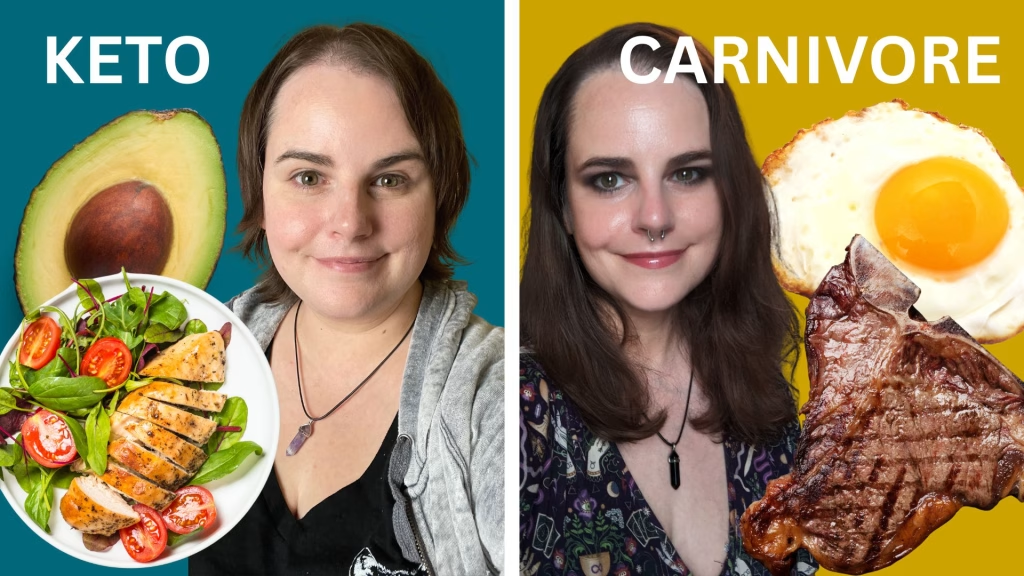
That was my experience for more than a decade. I tried calorie counting, keto, intuitive eating, and just about every ridiculous fad diet you can think of. Nothing worked for me until I found the carnivore diet.
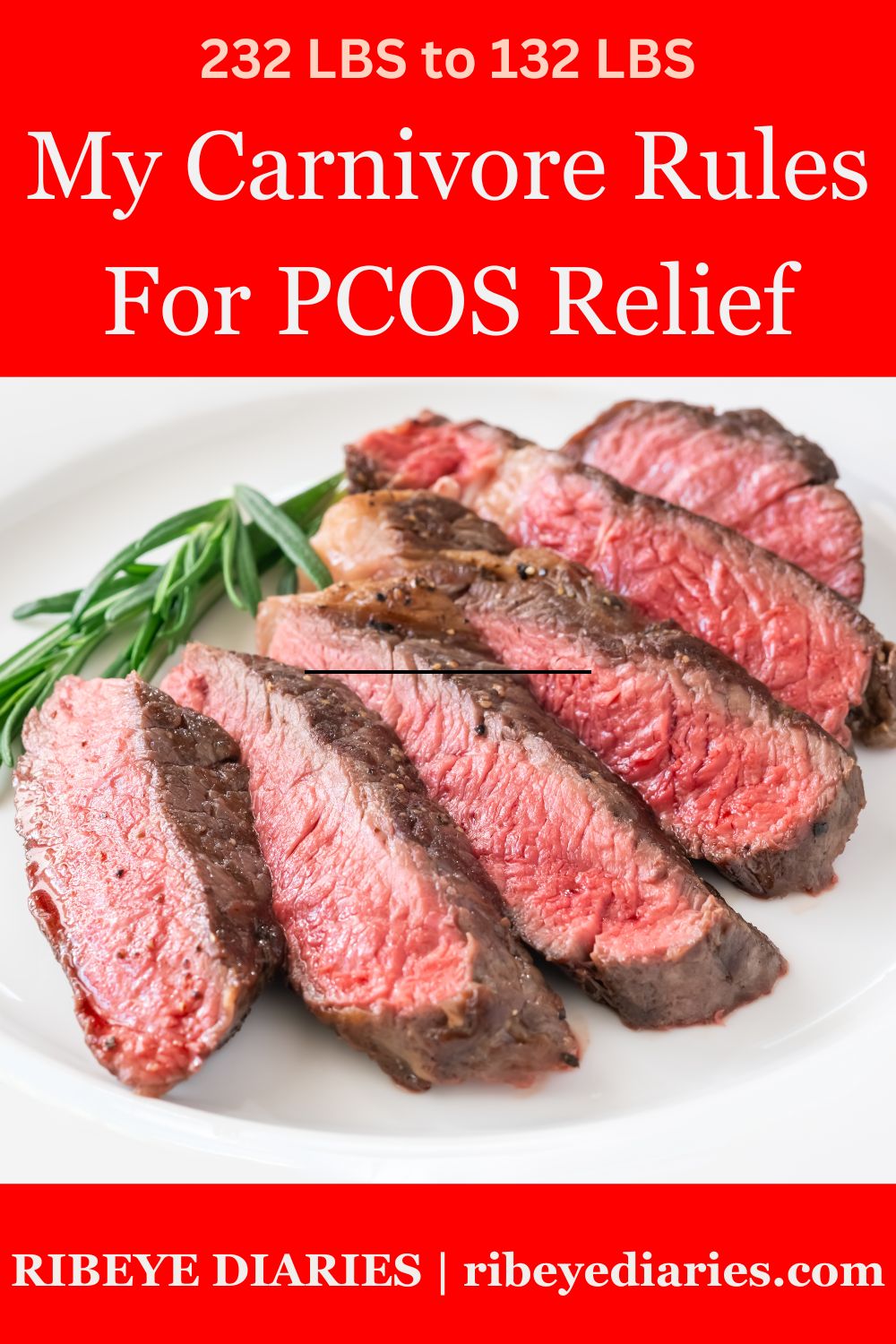
Once I managed to keep my carb intake down to almost zero, I finally began to see real changes. I dropped 100 lbs, my symptoms dramatically improved, and I felt better than I ever had – all within a period of about nine months.
You can read about my entire journey here.
After unfortunately falling off the wagon and seeing a complete reversal of my progress – including regaining some weight and ALL my symptoms returning, I got back in the saddle.
Now, I’m following a strict carnivore diet that keeps my insulin stable, eliminates cravings for sugar, and allows me to reach a healthy weight. I’ll probably have to follow this diet for the rest of my life to keep those benefits, but it’s worth it to me.
In this post, I’m sharing the exact “rules” I follow to help me stick to it.
What Carnivore Looks Like for Me
The carnivore diet looks a little different for everyone. Some people include dairy, some allow coffee and tea, some use basic seasonings, and some people eat nothing but beef, salt, and water.
Personally, I keep it strict and simple. I focus on fatty meat, eggs, butter, and no sweet tastes of any kind. I used to be a Diet Coke addict. But I found through trial and error that if I consume anything sweet, it can (and most likely will) trigger sugar cravings.
I don’t track macros or calories. I just eat fatty meat, eggs, and butter when I’m hungry until I’m fully satisfied. On carnivore, I can actually trust my hunger signals, which was impossible for me before.
My Core Food Rules
Here’s a breakdown of what I eat on my version of the carnivore diet. These are the foods I feel best support my hormonal health and allow me to lose weight.
Fatty Meat Only
Beef is the foundation of my diet. Most of my meals consist of ground beef, ribeye, and/or roasts. I choose fattier cuts because they’re more satiating, and high fat is necessary to stay healthy on carnivore.
I will occasionally eat pork (bacon, sausage, maybe a pork chop now and then) or skin-on chicken thighs for variety. That’s very occasional, though. I’d say about 80-90 percent of what I eat is just beef.
My favorite way to prepare meat is to grill it (using charcoal). Something about grilled meat tastes so much better to me. Grilling large amounts of meat several times a week is what helped me stick to carnivore when I first started.
I also enjoy just cooking up some ground beef in a skillet, seasoning it, and eating it with a few eggs. This is my go-to meal when I can’t grill. And of course, you can never go wrong with pot roast slow-cooked in a crockpot.
Eggs & Bacon
Eggs are another of my favorite foods. They’re full of nutrients, easy to cook, and relatively cheap. They’re a staple for me on carnivore.
I also eat bacon several times a week, but I check the ingredients to make sure there’s no added sugar. My favorite bacon is Applegate Farms No-Sugar Uncured Bacon. It’s one of the only varieties I can get in my area with no added sugar.
Butter is my Condiment
I cook almost everything in butter and/or top my meat with it. I get extra fat into my diet, and it makes my meals more satisfying.
I avoid all other dairy with the exception of a little cheese and heavy cream. I have ~ two tablespoons of heavy cream in my coffee every morning.
I’ll eat the occasional piece of cheddar cheese – usually melted onto a burger. It doesn’t seem to impact me negatively, but dairy can be insulinogenic for some people. I limit dairy consumption and always avoid milk, yogurt, and fresh cheeses.
Salt & Simple Seasonings
I salt my food generously, and I also use a few basic seasonings including:
- black pepper
- garlic powder
- onion powder
- cayenne pepper
- smoked paprika
- chili powder
- ground cumin
I avoid spice blends that contain sugar, maltodextrin, cornstarch, or any other fillers. Clean seasoning blends are few and far between, but you can find them. I usually just opt to make my own.
What I Don’t Eat (and Why)
Here’s a breakdown of the foods I don’t eat on carnivore:
- Anything that tastes sweet – This includes artificial sweeteners and diet sodas (this was a hard one to kick). They trigger sugar cravings for me.
- Vegetables, fruits, or plant foods – They cause bloating, cravings, and inflammation for me. I don’t feel good eating plant foods, and I feel much better when I cut them out entirely. I do make an exception for coffee and tea (see below).
- Broths, sauces, or dressings – I might occasionally have some store-bought bone broth when I’m sick or something, but I typically steer clear of any pre-made products like this.
- Organ meats – I know some carnivores swear by eating liver and other organs, but I don’t like them and I’ve never felt like they were necessary for me.
- Processed meats – I avoid overly processed meats like hot dogs, bologna, lunch meats, etc. I would eat them in a pinch if there was nothing else around, but I feel better eating fresh meat. (I do still eat bacon and sausage with no added sugar.)
- Alcohol – After a difficult time in my life a few years ago, I struggled with alcohol. Even during my first round of carnivore, I was drinking (sometimes heavily). I’ve cut it out completely this time, and I feel so much better.
Coffee & Tea
These are my two “gray area” items, but they work for me. I still have one cup of coffee in the morning because it’s how I dissolve my collagen peptides. I drink it with ~two tablespoons heavy cream and no sweetener.
I’ll also have green or black tea occasionally, mostly when I’m eating at a restaurant – which is something I try to limit.
And finally, I’ll drink herbal teas as medicinal preparations when needed.
Supplements I Take
I don’t find I need to take many supplements when eating a carnivore diet. I believe my body absorbs vitamins an minerals better when I’m not consuming a bunch of anti-nutrients in plant foods.
But I do take a few:
- Vitamin D – Supports hormonal and immune health. I tend to be low on Vitamin D in the winter months especially. Many women with PCOS have low Vitamin D levels, so it may be worth having them tested.
- Fish Oil – Helps with inflammation and insulin resistance. I rarely ever eat seafood either, so I feel like this kind of makes up for it. Not sure how much it matters, but I continue to supplement it for the Omega 3s.
- Collagen Peptides – I mostly take these for the anti-aging benefits. I’m 42 years old and not getting any younger! Supports joints, skin, hair, and gut health.
Why These Rules Work for Me
Although I started the carnivore diet out of desperation to just lose weight, it impacted my health so much more. It keeps my insulin under control and keeps me physically, emotionally, and hormonally stable.
When I eat this way:
- My sugar cravings disappear.
- My skin clears up.
- My cycles normalize.
- My energy stays level.
- My hair grows thicker and healthier.
- My weight drops and stabilizes.
- My food obsession resolves.
- My sleep improves.
- My mental health improves.
- My joints don’t hurt anymore.
Plus, the simplicity is liberating. I no longer constantly think about what I’m going to eat next. All the food noise is gone, and I just happily chow down on my meat and eggs at every meal.
I also don’t experience hunger the same way. It doesn’t feel like an emergency anymore, but more like a gentle nudge that I’ll need some energy soon. That alone has been life-changing for me. If you’ve experienced the PCOS hunger, you know what I’m talking about!
Do What Works for You
I’m not a doctor, and I have no qualifications to dole out nutrition advice. I’m just an average woman who’s been through hell with PCOS and finally found something that works. This version of the carnivore diet helps me feel and look my best, and I hope sharing this helps you figure out what works for you.
You may be able tolerate more dairy, or you may feel better eating liver a few times a week. You may prefer a more “animal-based” diet that includes some berries or whatever. Everyone is different. The point is to find a way of eating that helps you feel better.
If you’re not sure, you can always start out with a strict version of carnivore and slowly introduce other foods back in to see how they impact you. Some people use carnivore as an elimination diet, while some of us feel best staying strict for life.
Good luck out there!